Why does Grijsen use wood from tropical forests?
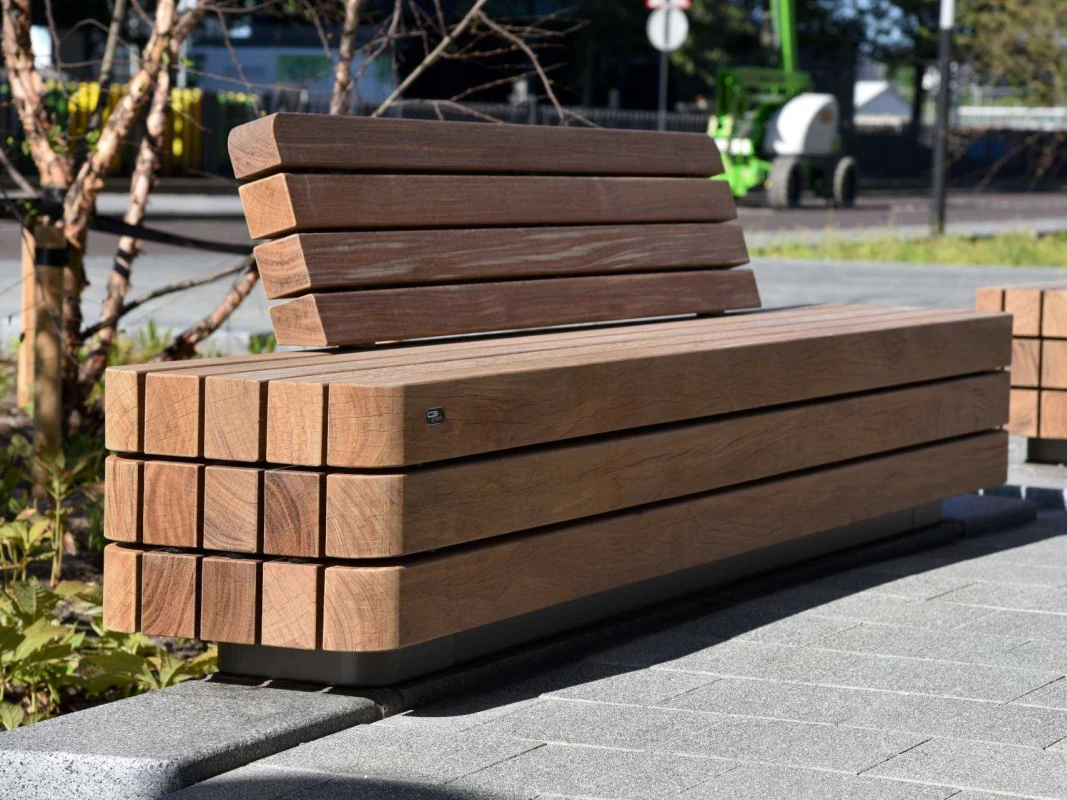
At Grijsen, we consciously choose to use tropical hardwood in our street furniture. Tropical hardwood, sourced from countries in Latin America or Africa, offers unique properties that make it highly suitable for public spaces.
Higher Quality
Firstly, the quality of tropical hardwood is superior to that of native wood types. The density of these hardwoods is significantly higher than that of oak or Douglas, resulting in a stronger material with a longer lifespan. This is important for street furniture that is exposed to frequent use and varying weather conditions.
The (untreated) hardwoods that Grijsen uses are classified in the highest sustainability class. For comparison, Douglas wood, even after intensive treatment, is classified in sustainability class 2. This high durability of hardwood translates into a longer lifespan of the furniture, meaning replacements or repairs are needed less often.
Impact of the hardwood
Although the initial costs and ecological impact of transporting hardwood may be higher compared to using native wood types, this is compensated in the long term. The high durability and longer lifespan of the hardwood mean the furniture needs to be replaced less frequently. This results in cost savings over the long term and reduces the overall environmental impact throughout the product's lifecycle.
Grijsen is aware of concerns regarding the use of tropical wood. Therefore, we work closely with FSC (Forest Stewardship Council) to ensure that all the wood we use is harvested responsibly. This process ensures that social, environmental, and economic interests are properly balanced. Grijsen is also certified with the FSC label.

Related questions
Nee, wij leveren geen straatmeubilair van kunststof. Wij proberen zoveel mogelijk materialen te gebruiken die duurzaam zijn en upcycle- of recyclebaar zijn. Daarom werken we met staal dat opnieuw voorzien kan worden van een poedercoating (lees meer over refurbishen) en hout dat geschaafd en opnieuw gebruikt kan worden.
Kunststof heeft die eigenschappen niet en is naar ons idee geen ideale duurzame keuze. Een bijkomend nadeel is dat bij vandalisme aan straatmeubilair gebroken of losgeslagen stukken kunststof direct in de natuur terechtkunnen komen, met alle gevolgen van dien.
We recommend that administrators of Grijsen street furniture periodically follow our maintenance advice at least twice a year. For locations by the coast, we advise performing maintenance at least four times a year.
This depends on the sustainability class of the wood type. The (untreated) hardwood that Grijsen uses in street furniture is classified in the highest sustainability class (sustainability class 1). Further treatment or preservation is not necessary.
On the other hand, Douglas fir is treated. The properties of the wood make it less suitable for untreated use in public spaces. The Douglas fir undergoes a special preservation process based on vacuum pressure. The impregnated elements have increased durability and belong to sustainability classes 2/3.
Grijsen uses various high-quality types of wood for the production of street furniture. Each type of wood has unique properties that make it suitable for use in public spaces. Grijsen uses both hardwoods, modified woods, and native woods.
Street furniture gradually loses its appearance over the years due to weather conditions and usage. Even with the best materials, this cannot be entirely avoided. However, regular cleaning and maintenance done correctly will help preserve its appearance for longer.
We recommend performing periodic maintenance according to our maintenance guidelines. These guidelines provide details on how to properly care for the furniture, including choosing the right cleaning products for various materials (such as hardwood, coated steel, stainless steel, etc.).
To maintain the visual quality and aesthetic appeal of our products, we advise following the maintenance guidelines periodically, at least twice a year, and at least four times a year in coastal areas.